The War Against AI Agents Has Begun
For the past few months, Silicon Valley has been pushing AI agents and agentic commerce on consumers. While there are open questions found with what problems are being addressed by the technology, attention has turned to how industry giants from retail to finance are approaching AI agents. The (early) answer doesn’t look reassuring for Silicon Valley. Earlier this week, JPMorgan became the latest giant to pour cold water on agents. There are observations to be made as to how Silicon Valley will need to adapt its approach to AI agents.
We are at the point of AI mania where companies can no longer take years to demonstrate monetization plans for a new AI product. There is immense pressure to talk about monetization at nearly the same time a product is unveiled. Meta didn’t wait for more than three weeks of availability to say loudly, and even proudly, that it was going to monetize its new AI agent, Muse, by seeking a percentage of transactions run through the agent. Meta’s monetization strategy appears to have then dictated its marketing angle that Muse is a way for consumers to save money by handling commerce transactions.
Not long after Muse launched, Amazon blocked the agent. This led to a wave of criticism from Silicon Valley that suggested Amazon was scared and worried.
This essay is available exclusively to Inside Orchard subscribers. Become a subscriber using the payment forms ($10/month or $100/year) below. Subscribers can continue reading this essay here.
An audio version of this essay is also available to subscribers. Sign in for instructions on getting the private podcast up and running in your favorite podcast player.
Special bundle pricing (just $5/month or $50/year) is available when combining an Inside Orchard subscription with an Above Avalon membership. More information on the bundle can be found here.
For more information on Inside Orchard subscriptions, go here.
Subscriber Privileges and Benefits
Receive Exclusive Essays. The cornerstone of an Inside Orchard subscription is access to Neil’s essays on the latest developments in the technology industry. Weekly essays are ~1,000 words and sent via email. Essays revolve around the following topics: technology industry analysis, business model analysis, technology’s impact on societal and consumer trends. Create a free profile to read a few sample essays.
Access Exclusive Private Podcast. Listen to Inside Orchard essays via an exclusive private podcast. After becoming a subscriber, all previously-published podcast episodes become available in your favorite podcast player. Podcast episodes never become available to the public.
Inside Orchard Support. Play an active role in supporting Inside Orchard as an independent source of analysis and perspective. Inside Orchard is 100% supported by its subscribers.
Keep an Ear Out for Audio Intelligence
While the iPhone Duo may have stolen the show at Apple’s September event earlier this month, Audio Intelligence was high on my list of intriguing new technology on display. With features including Siri Recap and Live Rewind, Audio Intelligence will uncover a new layer to our audible lives. Relying on Apple Watch and iPhone for distribution, Audio Intelligence is playing where various companies participating in AI mania, both large and small, are headed. The implications found with Audio Intelligence go far beyond simply taking high-level notes from meetings.
A defining characteristic associated with consumer-oriented intelligence has caught many companies off guard. We are seeing something of a hardware vengeance.
This essay is available exclusively to Inside Orchard subscribers. Become a subscriber using the payment forms ($10/month or $100/year) below. Subscribers can continue reading this essay here.
An audio version of this essay is also available to subscribers. Sign in for instructions on getting the private podcast up and running in your favorite podcast player.
Special bundle pricing (just $5/month or $50/year) is available when combining an Inside Orchard subscription with an Above Avalon membership. More information on the bundle can be found here.
For more information on Inside Orchard subscriptions, go here.
Subscriber Privileges and Benefits
Receive Exclusive Essays. The cornerstone of an Inside Orchard subscription is access to Neil’s essays on the latest developments in the technology industry. Weekly essays are ~1,000 words and sent via email. Essays revolve around the following topics: technology industry analysis, business model analysis, technology’s impact on societal and consumer trends. Create a free profile to read a few sample essays.
Access Exclusive Private Podcast. Listen to Inside Orchard essays via an exclusive private podcast. After becoming a subscriber, all previously-published podcast episodes become available in your favorite podcast player. Podcast episodes never become available to the public.
Inside Orchard Support. Play an active role in supporting Inside Orchard as an independent source of analysis and perspective. Inside Orchard is 100% supported by its subscribers.

Oura Files for an IPO: Here We Go Again
Late last week, Oura filed its S-1 for an IPO. With various financial metrics in hand, the company will now embark on creating the most glamorous narrative imaginable for its business prospects. If that sounds jaded, I follow the Warren Buffett and Charlie Munger schools of thought when it comes to IPOs. They are negotiated sales that often distort reality. The elaborate stories that companies and their bankers push in support of their IPOs have long led me to roll my eyes. For Oura, it’s impossible to not have flashbacks of other hardware start-ups that went public over the past decade or so only to underperform in the long run. It’s tough seeing Oura being any different.
Oura sells smart rings. As detailed in its S-1 filing, approximately five million people wear an Oura ring. Like some other consumer hardware start-ups, Oura utilizes a hardware plus subscription revenue model as the recurring revenue tied to $5.99/month or $69.99/year subscriptions buttresses what is ultimately lumpy hardware revenue associated with $399+ smart rings. The recurring revenue stream is also inevitably elevated as a key part of the company’s IPO story.
Fitbit, Peloton, Sonos, and GoPro all experienced the same inevitable roadblock found with being a start-up generating the bulk of their revenue from hardware sales.
This essay is available exclusively to Inside Orchard subscribers. Become a subscriber using the payment forms ($10/month or $100/year) below. Subscribers can continue reading this essay here.
An audio version of this essay is also available to subscribers. Sign in for instructions on getting the private podcast up and running in your favorite podcast player.
Special bundle pricing (just $5/month or $50/year) is available when combining an Inside Orchard subscription with an Above Avalon membership. More information on the bundle can be found here.
For more information on Inside Orchard subscriptions, go here.
Subscriber Privileges and Benefits
Receive Exclusive Essays. The cornerstone of an Inside Orchard subscription is access to Neil’s essays on the latest developments in the technology industry. Weekly essays are ~1,000 words and sent via email. Essays revolve around the following topics: technology industry analysis, business model analysis, technology’s impact on societal and consumer trends. Create a free profile to read a few sample essays.
Access Exclusive Private Podcast. Listen to Inside Orchard essays via an exclusive private podcast. After becoming a subscriber, all previously-published podcast episodes become available in your favorite podcast player. Podcast episodes never become available to the public.
Inside Orchard Support. Play an active role in supporting Inside Orchard as an independent source of analysis and perspective. Inside Orchard is 100% supported by its subscribers.

Becoming AI-Pilled
For those in finance, not needing to read dozens of earnings call transcripts each quarter may be tempting. Instead, one can position an AI agent as their own analyst, taking in earnings call transcripts and providing key takeaways and ultimately, investment ideas. The preceding proposition came across my X feed a few weeks back by an agentic AI proponent. It was met with a wave of supportive replies to the effect of “sign me up.” Unfortunately, the “AI agent for earnings call transcripts” idea would serve as a great way to become overwhelmed with noise.
We are quickly moving to a point in which one must be careful not to become AI-pilled – not to look at the world primarily through an AI lens. Thanks to AI, and most recently agentic AI, the risk of losing the key qualities and attributes that allow us to differentiate ourselves is rising. Clarity will be needed to see how best to integrate AI into our lives and society. Such clarity won’t be achieved if one is on the AI pill.
It's difficult to squeeze AI mania into one fundamental debate. However, such an attempt would likely result in there being two different views of AI’s role: AI as a tool to help get work done or AI as a tool to avoid doing work. The former is how Big Tech product marketing teams position one new AI feature after another in public. Unfortunately, the latter is what seems to be guiding product development for such AI features behind the scenes.
Given how fast some people are moving with what is technically possible with AI, the probability is increasing that
This essay is available exclusively to Inside Orchard subscribers. Become a subscriber using the payment forms ($10/month or $100/year) below. Subscribers can continue reading this essay here.
An audio version of this essay is also available to subscribers. Sign in for instructions on getting the private podcast up and running in your favorite podcast player.
Special bundle pricing (just $5/month or $50/year) is available when combining an Inside Orchard subscription with an Above Avalon membership. More information on the bundle can be found here.
For more information on Inside Orchard subscriptions, go here.
Subscriber Privileges and Benefits
Receive Exclusive Essays. The cornerstone of an Inside Orchard subscription is access to Neil’s essays on the latest developments in the technology industry. Weekly essays are ~1,000 words and sent via email. Essays revolve around the following topics: technology industry analysis, business model analysis, technology’s impact on societal and consumer trends. Create a free profile to read a few sample essays.
Access Exclusive Private Podcast. Listen to Inside Orchard essays via an exclusive private podcast. After becoming a subscriber, all previously-published podcast episodes become available in your favorite podcast player. Podcast episodes never become available to the public.
Inside Orchard Support. Play an active role in supporting Inside Orchard as an independent source of analysis and perspective. Inside Orchard is 100% supported by its subscribers.

Wall Street Is Predicting a Turn in AI Capex
This past earnings cycle in tech land was a doozy. Among the five traditional Big Tech firms, the average stock price magnitude change in the trading day that followed earnings was 13 percentage points. For public giants measured in the trillions of dollars of market capitalization, that kind of share price movement is unusual. Such dramatic one-day moves only tell part of the story. Leading up to earnings, Apple shares had one of their strongest 30-day stretches in years. (Shares did sell off after the company reported messy guidance.) Microsoft shares are up 32% over the past month. Not to feel left out, Amazon shares are up 23% over the past two weeks.
Is it realistic to assume that three out of the five Big Tech firms reported quarterly earnings that were so good or bad as to cause their valuations to rise or fall by 25%, respectively? Anything is possible, although it’s not likely given how many analysts and firms follow the giants, analyzing their every move. We would need to see quite the shocker of an earnings release for Big Tech’s collective valuation to rise or fall by 25% overnight. Instead of shocks, 2Q26 earnings season in Big Tech land contained mild surprises here and there. Why then were 2Q26 earnings reactions so extreme?
Since the market is forward-looking, Wall Street is in the business of assessing when good times will turn sour and when bad times will turn positive.
An Inside Orchard subscription is required to continue reading this essay. Subscribers can read the essay here.
An audio version of this essay is also available to subscribers. Sign in for instructions on getting the private podcast up and running in your favorite podcast player.
Choose either a monthly or annual subscription. Payment is processed by Memberful and secured by Stripe. Apple Pay and other mobile payment options are accepted. Special bundle pricing is available when subscribing to the Above Avalon Daily newsletter.
Subscriber Privileges and Benefits
Receive Exclusive Essays. The cornerstone of an Inside Orchard subscription is access to Neil’s essays on the latest developments in the technology industry. Weekly essays are ~1,000 words and sent via email. Essays revolve around the following topics: technology industry analysis, business model analysis, technology’s impact on societal and consumer trends. Create a free profile to read a few sample essays.
Access Exclusive Private Podcast. Listen to Inside Orchard essays via an exclusive private podcast. After becoming a subscriber, all previously-published podcast episodes become available in your favorite podcast player. Podcast episodes never become available to the public.
Inside Orchard Support. Play an active role in supporting Inside Orchard as an independent source of analysis and perspective. Inside Orchard is 100% supported by its subscribers.

A Meta Contradiction
Some days, I find myself super perplexed by Meta’s business. The company has what may be one of the most fascinating and value-add content delivery apparatuses the world has ever seen. There are other days when Meta’s business strikes me as a stain on society, an addiction-inducing slop machine representing grave harm for users. How can one company fuel such opposing attitudes? The answer is found in Meta’s income statement.
While on vacation earlier this month, it occurred to me just how dramatically the advertising world has changed for tourist-oriented businesses.
An Inside Orchard subscription is required to continue reading this essay. Subscribers can read the essay here.
An audio version of this essay is also available to subscribers. Sign in for instructions on getting the private podcast up and running in your favorite podcast player.
Choose either a monthly or annual subscription. Payment is processed by Memberful and secured by Stripe. Apple Pay and other mobile payment options are accepted. Special bundle pricing is available when subscribing to the Above Avalon Daily newsletter.
Subscriber Privileges and Benefits
Receive Exclusive Essays. The cornerstone of an Inside Orchard subscription is access to Neil’s essays on the latest developments in the technology industry. Weekly essays are ~1,000 words and sent via email. Essays revolve around the following topics: technology industry analysis, business model analysis, technology’s impact on societal and consumer trends. Create a free profile to read a few sample essays.
Access Exclusive Private Podcast. Listen to Inside Orchard essays via an exclusive private podcast. After becoming a subscriber, all previously-published podcast episodes become available in your favorite podcast player. Podcast episodes never become available to the public.
Inside Orchard Support. Play an active role in supporting Inside Orchard as an independent source of analysis and perspective. Inside Orchard is 100% supported by its subscribers.

Nike Is Trying to Find a Spark
Over the Fourth of July weekend, I did something that I hadn’t done in years: visit a shoe store – one of those massive shoe emporiums in a retrofitted space previously belonging to a now bankrupt retailer. The store’s entire inventory, consisting of thousands of shoes, was positioned on the showroom floor, viewable to the public. It was an enlightening experience to see firsthand how dramatically the lifestyle shoe market has changed since the pandemic. My mind has since been stuck on Nike and where the company will go from here.
In the 17 months since we last talked about Nike, the company has seen progress adjusting to the marketplace. A recommitment to wholesale distribution has worked as intended for Nike. There was no shortage of those iconic orange boxes at the shoe emporium store that I visited. Wholesale revenue is trending up again as Nike goes back on its direct-to-consumer bet from a few years ago. Nike’s revenue for the fiscal year that just ended was approximately flat, a much better result compared to the 10% drop in FY25.
In what may come as a surprise to many, Nike is again seeing momentum in running, which suggests market share losses may be slowing. Some of that is likely driven by Nike simply having inventory available where people buy running shoes. Nike is also seeing momentum with football (soccer) and kids.
Nike’s broader doubling down on sports to create brand halos in non-sports markets hasn’t faired as well.
An Inside Orchard subscription is required to continue reading this essay. Subscribers can read the essay here.
An audio version of this essay is also available to subscribers. Sign in for instructions on getting the private podcast up and running in your favorite podcast player.
Choose either a monthly or annual subscription. Payment is processed by Memberful and secured by Stripe. Apple Pay and other mobile payment options are accepted. Special bundle pricing is available when subscribing to the Above Avalon Daily newsletter.
Subscriber Privileges and Benefits
Receive Exclusive Essays. The cornerstone of an Inside Orchard subscription is access to Neil’s essays on the latest developments in the technology industry. Weekly essays are ~1,000 words and sent via email. Essays revolve around the following topics: technology industry analysis, business model analysis, technology’s impact on societal and consumer trends. Create a free profile to read a few sample essays.
Access Exclusive Private Podcast. Listen to Inside Orchard essays via an exclusive private podcast. After becoming a subscriber, all previously-published podcast episodes become available in your favorite podcast player. Podcast episodes never become available to the public.
Inside Orchard Support. Play an active role in supporting Inside Orchard as an independent source of analysis and perspective. Inside Orchard is 100% supported by its subscribers.

Roku Waved the White Flag
It’s been years since I last wrote about Roku. The lack of discussion reflected the company having lost relevancy in video streaming despite reporting continued growth in customers and watch time. Thanks to Fox’s $22 billion acquisition offer for Roku, founder and CEO Anthony Wood received an honorable discharge from the market with some dignity intact. The deal total is a far cry, however from the $100+ billion market cap that Roku traded at a few years ago.
The promise that had been found with Roku’s business model involved coming up with a TV OS that advertisers wouldn’t be able to resist. As the mass market shifted from linear TV to streaming, Roku would capitalize on dislocation in video advertising. The shift from linear to streaming would push consumers into paid video silos void of advertising. This would leave advertisers in a bind, unable to reach viewers. Advertisers, not video viewers, would serve as Roku’s customers. By working with TV set makers to get its OS on as many TVs as possible, Roku could also chase ancillary revenue streams such as earning revenue share for selling paid video bundles.
An Inside Orchard subscription is required to continue reading this essay. Subscribers can read the essay here.
An audio version of this essay is also available to subscribers. Sign in for instructions on getting the private podcast up and running in your favorite podcast player.
Choose either a monthly or annual subscription. Payment is processed by Memberful and secured by Stripe. Apple Pay and other mobile payment options are accepted. Special bundle pricing is available when subscribing to the Above Avalon Daily newsletter.
Subscriber Privileges and Benefits
Receive Exclusive Essays. The cornerstone of an Inside Orchard subscription is access to Neil’s essays on the latest developments in the technology industry. Weekly essays are ~1,000 words and sent via email. Essays revolve around the following topics: technology industry analysis, business model analysis, technology’s impact on societal and consumer trends. Create a free profile to read a few sample essays.
Access Exclusive Private Podcast. Listen to Inside Orchard essays via an exclusive private podcast. After becoming a subscriber, all previously-published podcast episodes become available in your favorite podcast player. Podcast episodes never become available to the public.
Inside Orchard Support. Play an active role in supporting Inside Orchard as an independent source of analysis and perspective. Inside Orchard is 100% supported by its subscribers.

Rivian’s Identity Crisis
Last month, Rivian’s software chief did some press to talk up the company’s AI assistant. It was some of the worst PR to hit my radar in quite a long time. Rivian yet again allowed its controversial CarPlay stance to lead headlines, and its agentic AI vision didn’t make sense. The company positioning Rivian as an agentic vehicle tells me that it does not know where its next marginal customer will come from. In finding a root cause for such a shortcoming, Rivian is suffering from an identity crisis.
Rivian is a niche car company that gets more press for its anti-CarPlay stance than anything else that it does. The company has shipped just shy of 165,000 vehicles over the past four years. That’s roughly equal to the number of vehicles Toyota sells in five days. High vehicle pricing has hurt Rivian’s accessibility. Even after considering Rivian’s internal sales forecast for the lower-cost R2, Rivian expects to ship just 62,000 to 67,000 vehicles this year. Given high vehicle pricing, Rivian has squandered what may have been the opportunity of the decade, the chance to pick up curious Tesla owners interested in EVs but frustrated by or upset with Elon Musk getting into politics. The miscalculation is up there with Peloton selling in-home fitness equipment yet not being able to take full advantage of a once-in-a-lifetime pandemic that caused every gym to be closed.
On the software and services front, last July, Rivian moved from its own in-house mapping solution to a highly customizable Google Maps solution. Rivian came up short on its goal to do more of the software and driver/passenger compartment experience themselves.
An Inside Orchard subscription is required to continue reading this essay. Subscribers can read the essay here.
An audio version of this essay is also available to subscribers. Sign in for instructions on getting the private podcast up and running in your favorite podcast player.
Choose either a monthly or annual subscription. Payment is processed by Memberful and secured by Stripe. Apple Pay and other mobile payment options are accepted. Special bundle pricing is available when subscribing to the Above Avalon Daily newsletter.
Subscriber Privileges and Benefits
Receive Exclusive Essays. The cornerstone of an Inside Orchard subscription is access to Neil’s essays on the latest developments in the technology industry. Weekly essays are ~1,000 words and sent via email. Essays revolve around the following topics: technology industry analysis, business model analysis, technology’s impact on societal and consumer trends. Create a free profile to read a few sample essays.
Access Exclusive Private Podcast. Listen to Inside Orchard essays via an exclusive private podcast. After becoming a subscriber, all previously-published podcast episodes become available in your favorite podcast player. Podcast episodes never become available to the public.
Inside Orchard Support. Play an active role in supporting Inside Orchard as an independent source of analysis and perspective. Inside Orchard is 100% supported by its subscribers.

The iPhone Won Google I/O
It may have seemed innocent enough. Google showcased two iPhones (and a Mac) on stage during the keynote at its largest developer conference of the year. The devices were used to demo various Google AI features working on popular Apple devices. Industry observers and analysts were quick to downplay Google’s decision to elevate Apple hardware at Google I/O. Google was said to be smart to highlight how devices that its customers were likely using worked with the company’s latest offerings. I view things quite differently. Going out of its way to show Apple hardware on stage at Google I/O was an unforced error on Google’s part that amounted to giving its own hardware ambitions a gut punch.
Hardware has always been a thorn in Google’s side. In the early years of the smartphone war, Google executives looked at hardware as a limiting factor for getting Android into as many hands and pockets as possible. The OEM model, depending on Samsung and others for hardware, was viewed as an acceptable answer by Google to have Android grab smartphone market share. This was especially true relative to Apple’s business model of controlling both hardware and software. For the first half of the 2010s, the iOS vs. Android war captivated Silicon Valley. Certain metrics such as the number of apps available on each platform were closely monitored for signs of momentum shifts.
As Apple’s product strategy for the iPhone progressed, Google began to see a problem with relying on the OEM model for Android.
An Inside Orchard subscription is required to continue reading this essay. Subscribers can read the essay here.
An audio version of this essay is also available to subscribers. Sign in for instructions on getting the private podcast up and running in your favorite podcast player.
Choose either a monthly or annual subscription. Payment is processed by Memberful and secured by Stripe. Apple Pay and other mobile payment options are accepted. Special bundle pricing is available when subscribing to the Above Avalon Daily newsletter.
Subscriber Privileges and Benefits
Receive Exclusive Essays. The cornerstone of an Inside Orchard subscription is access to Neil’s essays on the latest developments in the technology industry. Weekly essays are ~1,000 words and sent via email. Essays revolve around the following topics: technology industry analysis, business model analysis, technology’s impact on societal and consumer trends. Create a free profile to read a few sample essays.
Access Exclusive Private Podcast. Listen to Inside Orchard essays via an exclusive private podcast. After becoming a subscriber, all previously-published podcast episodes become available in your favorite podcast player. Podcast episodes never become available to the public.
Inside Orchard Support. Play an active role in supporting Inside Orchard as an independent source of analysis and perspective. Inside Orchard is 100% supported by its subscribers.

Berkshire Hathaway Will Embrace Tech
As expected, social media is ablaze with Berkshire Hathaway’s latest 13F filing, the first to be released with Greg Abel as CEO. The various buy and sell decisions overseen by Warren Buffett’s successor were always going to be put under a microscope as the market debates Abel’s skill as a stock picker. The 13F wasn’t short of drama. When examining Abel’s background, strengths, and weaknesses, as well as Berkshire’s standing, a picture of how Berkshire Hathaway will look post-Buffett is starting to come into focus. The company is likely in for dramatic changes, and Silicon Valley will play a role.
During his first three months as CEO, Abel worked quickly to put his touch on Berkshire’s equity portfolio. As detailed in Berkshire’s latest 13F, Abel reduced the number of companies comprising Berkshire’s equity portfolio by 30%. Most of the positions sold appear to have been purchased by Todd Combs over the years. Combs had initially been groomed to be Buffett’s protégé. Those plans shifted with Combs recently leaving Berkshire to run a special investment fund for Jamie Dimon at JPMorgan. Berkshire also announced new stakes in Macy’s and Delta, names in industries that Buffett has famously talked down in the past. The big move was Berkshire tripling its stake in Alphabet to what is now a $23 billion position at its current stock price.
For a company that famously “didn’t get” technology, approximately 30% of Berkshire’s equity portfolio is once again tech, represented by two companies: Apple and Google. This percentage had been higher prior to Buffett slashing Berkshire’s Apple stake. However, Apple had always been thought of as different than a tech pure play. When explaining the Apple purchase, Buffett would often comment on Apple’s uniqueness resembling more of a consumer staples company.
With Greg Abel as CEO, I expect to see two major changes at Berkshire Hathaway:
An Inside Orchard subscription is required to continue reading this essay. Subscribers can read the essay here.
An audio version of this essay is also available to subscribers. Sign in for instructions on getting the private podcast up and running in your favorite podcast player.
Choose either a monthly or annual subscription. Payment is processed by Memberful and secured by Stripe. Apple Pay and other mobile payment options are accepted. Special bundle pricing is available when subscribing to the Above Avalon Daily newsletter.
Subscriber Privileges and Benefits
Receive Exclusive Essays. The cornerstone of an Inside Orchard subscription is access to Neil’s essays on the latest developments in the technology industry. Weekly essays are ~1,000 words and sent via email. Essays revolve around the following topics: technology industry analysis, business model analysis, technology’s impact on societal and consumer trends. Create a free profile to read a few sample essays.
Access Exclusive Private Podcast. Listen to Inside Orchard essays via an exclusive private podcast. After becoming a subscriber, all previously-published podcast episodes become available in your favorite podcast player. Podcast episodes never become available to the public.
Inside Orchard Support. Play an active role in supporting Inside Orchard as an independent source of analysis and perspective. Inside Orchard is 100% supported by its subscribers.

Keep an Eye on Netflix and Spotify
Both Netflix and Spotify deserve close monitoring. From Wall Street’s perspective, something is wrong with the companies. On a combined basis, Netflix’s and Spotify’s market caps have declined by 35% or $250 billion from peak levels. The move especially stands out relative to continued momentum that has flowed to Big Tech companies.
Wall Street trading behavior rarely tells the full story as the market is known to misprice business fundamentals. With that said, the broader stories surrounding Netflix’s and Spotify’s businesses do seem to have entered new chapters. At a time when Big Tech is seeing accelerated revenue growth, Netflix and Spotify are experiencing slowing revenue growth. Netflix management forecasts 13% revenue growth in 2026, down from 16% in 2024 and 2025. Excluding FX, Spotify revenue growth has declined from 20% to 15% over the past two years. For services companies generating nearly all their revenue from recurring streams, slowing revenue growth shouldn’t be brushed aside. To put those growth rates into perspective, Apple will report nearly 7x more revenue in 2026 compared to Netflix and Spotify on a combined basis while reporting stronger revenue growth (17%).
A major driver behind Netflix’s and Spotify’s slowing revenue growth is maturing paid subscriber growth. Netflix’s paid subscriber growth (net basis) was nearly cut in half from 42 million in 2024 to approximately 25 million in 2025. Spotify’s paid subscriber growth (net basis) has fared better, remaining relatively steady between 25 million and 30 million annually. However, given Spotify’s ballooning free user tally and
An Inside Orchard subscription is required to continue reading this essay. Subscribers can read the essay here.
An audio version of this essay is also available to subscribers. Sign in for instructions on getting the private podcast up and running in your favorite podcast player.
Choose either a monthly or annual subscription. Payment is processed by Memberful and secured by Stripe. Apple Pay and other mobile payment options are accepted. Special bundle pricing is available when subscribing to the Above Avalon Daily newsletter.
Subscriber Privileges and Benefits
Receive Exclusive Essays. The cornerstone of an Inside Orchard subscription is access to Neil’s essays on the latest developments in the technology industry. Weekly essays are ~1,000 words and sent via email. Essays revolve around the following topics: technology industry analysis, business model analysis, technology’s impact on societal and consumer trends. Create a free profile to read a few sample essays.
Access Exclusive Private Podcast. Listen to Inside Orchard essays via an exclusive private podcast. After becoming a subscriber, all previously-published podcast episodes become available in your favorite podcast player. Podcast episodes never become available to the public.
Inside Orchard Support. Play an active role in supporting Inside Orchard as an independent source of analysis and perspective. Inside Orchard is 100% supported by its subscribers.

New Media’s Authenticity Problem
Prior to OpenAI acquiring TBPN for approximately $100 million, there had been something about the podcasts, newsletters, and livecasts comprising new media that wasn’t sitting right with me. It increasingly felt like some of the prevailing assumptions underpinning new media’s growth over the past decade had been a mirage. There is now a side to new media that once seen, can’t be unseen, and it’s not pretty.
A decade ago, the new media space was the Wild West. I launched Inside Orchard’s sibling site, Above Avalon, in November 2014 at a time when “newsletter” was more likely to be associated with investment bulletins sent via postal mail. My business plan was focused on going direct to readers while playing in fertile ground between Wall Street firms publishing research for institutional clients and the Wall Street Journals and the New York Times of the world being too big to cover Apple’s inner workings. While there were plenty of “independent” websites and media publications at the time, the true one-person-does-it-all publication was in its infancy.
During this era, pros and cons found with new media were as follows:
Directness with readers / audience. Instead of writing for a large publication or website and having little to no visibility regarding who was consuming your work, freedom and power were found with building your own audience.
An Inside Orchard subscription is required to continue reading this essay. Subscribers can read the essay here.
An audio version of this essay is also available to subscribers. Sign in for instructions on getting the private podcast up and running in your favorite podcast player.
Choose either a monthly or annual subscription. Payment is processed by Memberful and secured by Stripe. Apple Pay and other mobile payment options are accepted. Special bundle pricing is available when subscribing to the Above Avalon Daily newsletter.
Subscriber Privileges and Benefits
Receive Exclusive Essays. The cornerstone of an Inside Orchard subscription is access to Neil’s essays on the latest developments in the technology industry. Weekly essays are ~1,000 words and sent via email. Essays revolve around the following topics: technology industry analysis, business model analysis, technology’s impact on societal and consumer trends. Create a free profile to read a few sample essays.
Access Exclusive Private Podcast. Listen to Inside Orchard essays via an exclusive private podcast. After becoming a subscriber, all previously-published podcast episodes become available in your favorite podcast player. Podcast episodes never become available to the public.
Inside Orchard Support. Play an active role in supporting Inside Orchard as an independent source of analysis and perspective. Inside Orchard is 100% supported by its subscribers.

Acquiring TBPN Is an OpenAI Hail Mary Pass
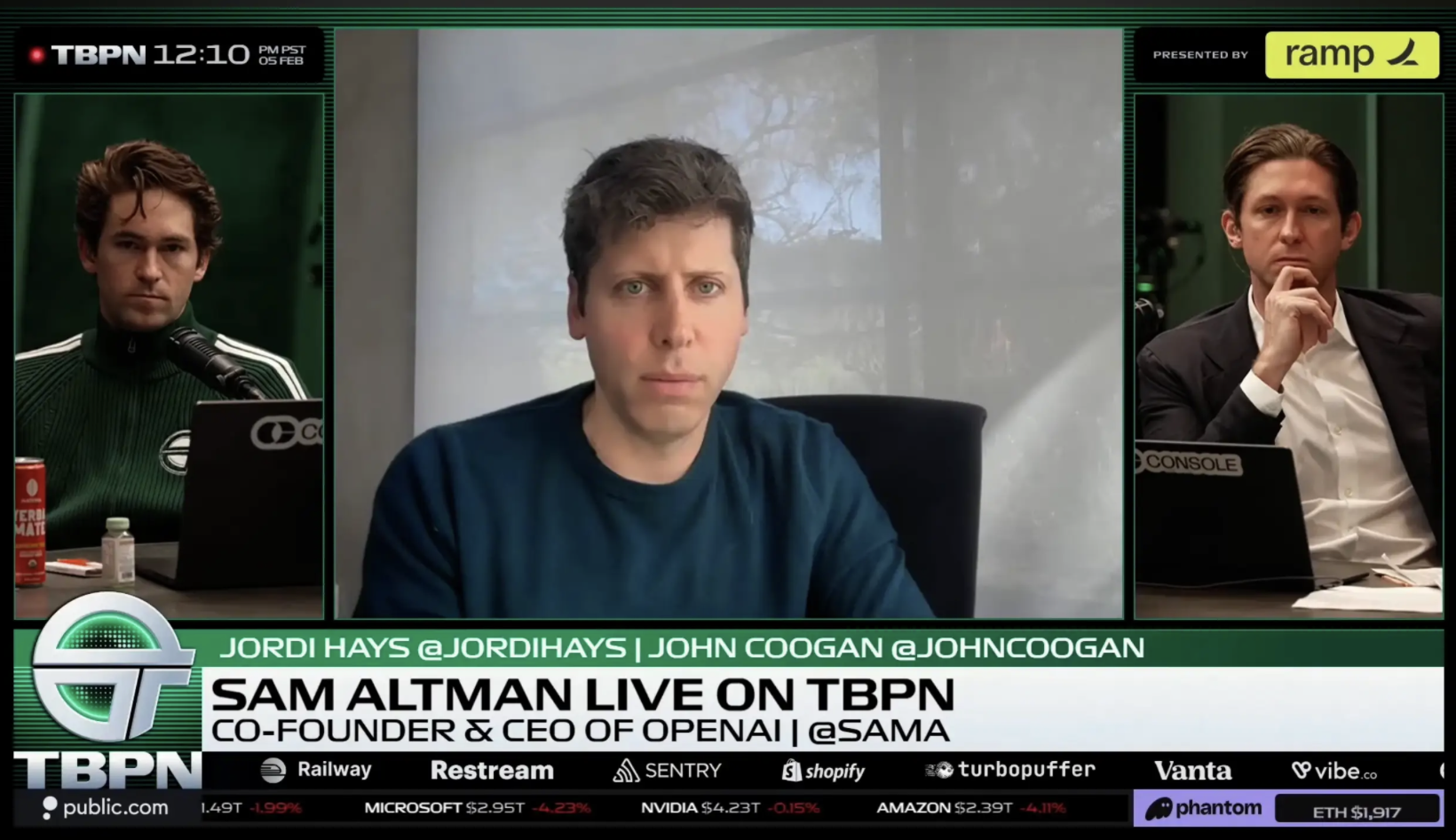
OpenAI is spooked. Thanks to Anthropic grabbing a series of business, financial, and product wins along with the need to improve finances ahead of an IPO, OpenAI has been making one change after another in a bid to clean up house. The latest move, acquiring TBPN, is a Hail Mary pass that strikes me as having low odds of succeeding. OpenAI is looking for a way to reach consumers, and they think two tech podcasters with marketing experience hold the keys to unlocking the strategy.
Started just 13 months ago, TBPN is an 11-employee media start-up that hosts a daily three-hour talk show livestreamed on various social media platforms. The livestreams are then cut into short clips that are circulated on the same social media platforms. It’s the clips, not the multi-hour livestreams, that grab the most attention.
TBPN positioned itself as an antidote to legacy media’s tech cynicism. Along those lines, they have been so successful as to be a caricature – a show that could easily be mocked on SNL. By being so over the top, optimistic, and promotional, TBPN was able to build authenticity with a younger audience that is mentally all-in on AI mania.
TBPN’s daily livestream was deemed early on by PR teams across Silicon Valley to be a safe space. At least up until yesterday, TBPN was
An Inside Orchard subscription is required to continue reading this essay. Subscribers can read the essay here.
An audio version of this essay is also available to subscribers. Sign in for instructions on getting the private podcast up and running in your favorite podcast player.
Choose either a monthly or annual subscription. Payment is processed by Memberful and secured by Stripe. Apple Pay and other mobile payment options are accepted. Special bundle pricing is available when subscribing to the Above Avalon Daily newsletter.
Subscriber Privileges and Benefits
Receive Exclusive Essays. The cornerstone of an Inside Orchard subscription is access to Neil’s essays on the latest developments in the technology industry. Weekly essays are ~1,000 words and sent via email. Essays revolve around the following topics: technology industry analysis, business model analysis, technology’s impact on societal and consumer trends. Create a free profile to read a few sample essays.
Access Exclusive Private Podcast. Listen to Inside Orchard essays via an exclusive private podcast. After becoming a subscriber, all previously-published podcast episodes become available in your favorite podcast player. Podcast episodes never become available to the public.
Inside Orchard Support. Play an active role in supporting Inside Orchard as an independent source of analysis and perspective. Inside Orchard is 100% supported by its subscribers.

AI Is in a Weird Place Right Now
Three years into AI mania, things continue to be volatile. The items capturing buzz continue to evolve while consumers are looking at AI with increasingly divergent viewpoints.
Consider the following AI developments that have been on my radar:
Chatbot platform craze has cooled. Efforts to turn chatbots into new-age digital platforms are not going as smoothly as some companies planned. The idea of using apps within ChatGPT, not surprisingly, has flatlined. The same goes for agentic commerce. Walmart provided the latest evidence that chatbot usage isn’t trending like some proponents hoped – purchase conversion inside ChatGPT was one-third the rate of purchase conversion on Walmart’s website.
Mania has turned to utility agents. OpenClaw and Claude Code are grabbing the buzz that previously went to consumer-oriented chatbots. In the process, AI utility has become more niche and difficult to access for the mass market. ChatGPT usage
An Inside Orchard subscription is required to continue reading this essay. Subscribers can read the essay here.
An audio version of this essay is also available to subscribers. Sign in for instructions on getting the private podcast up and running in your favorite podcast player.
Choose either a monthly or annual subscription. Payment is processed by Memberful and secured by Stripe. Apple Pay and other mobile payment options are accepted. Special bundle pricing is available when subscribing to the Above Avalon Daily newsletter.
Subscriber Privileges and Benefits
Receive Exclusive Essays. The cornerstone of an Inside Orchard subscription is access to Neil’s essays on the latest developments in the technology industry. Weekly essays are ~1,000 words and sent via email. Essays revolve around the following topics: technology industry analysis, business model analysis, technology’s impact on societal and consumer trends. Create a free profile to read a few sample essays.
Access Exclusive Private Podcast. Listen to Inside Orchard essays via an exclusive private podcast. After becoming a subscriber, all previously-published podcast episodes become available in your favorite podcast player. Podcast episodes never become available to the public.
Inside Orchard Support. Play an active role in supporting Inside Orchard as an independent source of analysis and perspective. Inside Orchard is 100% supported by its subscribers.

The Apple Silicon Renaissance
For the past 10 days, an all-new $599 MacBook has captivated the tech press. A laptop grabbing so much attention in 2026 probably wasn’t on too many prediction lists. The situation may lead people to wonder if we are seeing something of a laptop renewal or even renaissance. Such an assertion doesn’t sit right with me. After spending some time with MacBook Neo, the takeaway isn’t that the laptop is being rethought or rejuvenated. Instead, we are still seeing ramifications associated with Apple’s original bet on custom silicon.
Many of the prognostications that have been made regarding laptops / desktops and their relationship to smartphones, tablets, and wearables have turned out to be mostly accurate. Smartphone and tablet sales exceed laptop / desktop sales a few times over. Within the Apple installed base, there are nearly 4x more iPhones than iPads out in the wild while iPads outnumber Macs by 2x.
At a very high level, MacBook Neo is Apple betting on
Become an Inside Orchard subscriber today to continue reading. Already a subscriber? Sign in and read the full essay here.
An audio version of this essay is also available to subscribers. Sign in for instructions on getting the private podcast up and running in your favorite podcast player.
Choose either a monthly or annual subscription. Payment is processed by Memberful and secured by Stripe. Apple Pay and other mobile payment options are accepted. Special bundle pricing is available when subscribing to the Above Avalon Daily newsletter.
Subscriber Privileges and Benefits
Receive Exclusive Essays. The cornerstone of an Inside Orchard subscription is access to Neil’s essays on the latest developments in the technology industry. Weekly essays are ~1,000 words and sent via email. Essays revolve around the following topics: technology industry analysis, business model analysis, technology’s impact on societal and consumer trends. Create a free profile to read a few sample essays.
Access Exclusive Private Podcast. Listen to Inside Orchard essays via an exclusive private podcast. After becoming a subscriber, all previously-published podcast episodes become available in your favorite podcast player. Podcast episodes never become available to the public.
Inside Orchard Support. Play an active role in supporting Inside Orchard as an independent source of analysis and perspective. Inside Orchard is 100% supported by its subscribers.

Anthropic Is Grabbing Wins

Although we are only three months into 2026, this is shaping up to be a good year for Anthropic. The company can count a number of business, product, and branding wins that will be valuable in pursuing an IPO. At the heart of this development is a company willing to put aside near-term revenue generation in order to stand for something. It’s a trait that is increasingly not talked about enough or prioritized by tech companies.
Anthropic’s wins have included:
Super Bowl Ad. Anthropic found itself in the middle of one of the livelier tech advertising controversies in recent memory. Following OpenAI’s decision to embrace advertising in ChatGPT, Anthropic unleashed a marketing campaign for Claude aimed at throwing doubt on ad-laden chatbots. I found the commercials to be humorous but depressing as they humanized just how cold and sterile chatbots are to use. The ads were a success for Anthropic as they generated a large amount of publicity and spooked OpenAI to the point of Sam Altman crying foul. If Anthropic goes on to greatness, the ad campaign will be looked back on as marking an even bigger win.
Claude Code. Thanks to Claude Code, Anthropic finds
Become an Inside Orchard subscriber today to continue reading. Already a subscriber? Sign in and read the full essay here.
An audio version of this essay is also available to subscribers. Sign in for instructions on getting the private podcast up and running in your favorite podcast player.
Choose either a monthly or annual subscription. Payment is processed by Memberful and secured by Stripe. Apple Pay and other mobile payment options are accepted. Special bundle pricing is available when subscribing to the Above Avalon Daily newsletter.
Subscriber Privileges and Benefits
Receive Exclusive Essays. The cornerstone of an Inside Orchard subscription is access to Neil’s essays on the latest developments in the technology industry. Weekly essays are ~1,000 words and sent via email. Essays revolve around the following topics: technology industry analysis, business model analysis, technology’s impact on societal and consumer trends. Create a free profile to read a few sample essays.
Access Exclusive Private Podcast. Listen to Inside Orchard essays via an exclusive private podcast. After becoming a subscriber, all previously-published podcast episodes become available in your favorite podcast player. Podcast episodes never become available to the public.
Inside Orchard Support. Play an active role in supporting Inside Orchard as an independent source of analysis and perspective. Inside Orchard is 100% supported by its subscribers.

Wall Street Is Beginning to Panic About Big Tech Capex
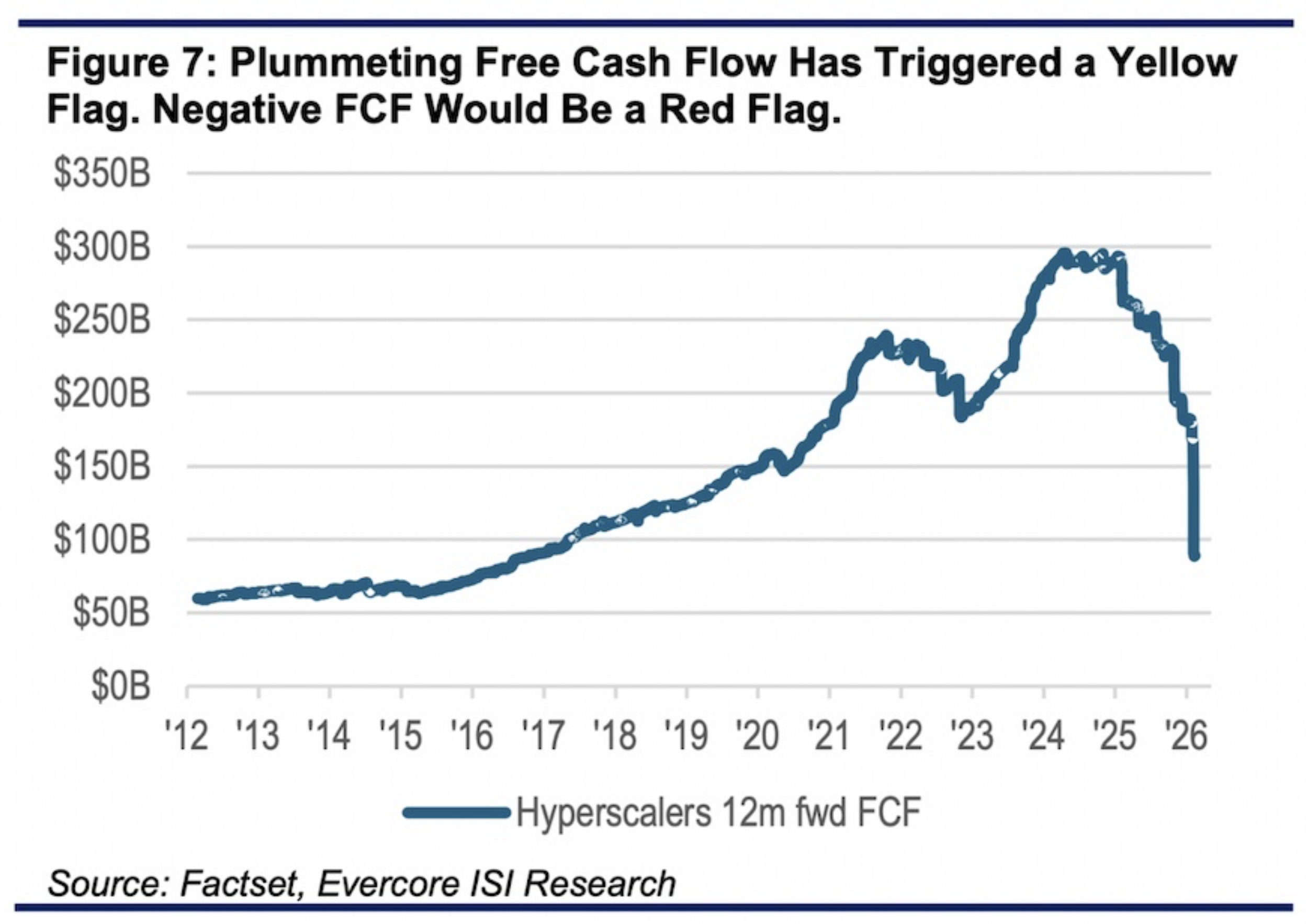
Over the past few years, a periodic topic that we have talked about in these essays has revolved around Wall Street’s evolving attitude to AI mania. On again, off again jitters found with AI-related capital expenditures (capex) in 2023 and 2024 led to an attempt to separate perceived AI winners from losers in the back half of 2025. While this winners versus losers mentality still stands as certain tech stocks continue to outperform, there is evidence of Wall Street once again becoming nervous about AI’s impact on Big Tech capex. The stakes are much higher this time around with feelings of panic beginning to circulate in the air.
Despite reporting all-around good results for the fourth quarter, Wall Street just didn’t have much appetite for “Mag 7” (Alphabet, Amazon, Apple, Meta, Microsoft, Nvidia, and Tesla) shares. Management commentary pointing to continued huge jumps in AI capex for 2026 offset what were genuinely strong revenue trends for many companies. The Mag 7 is looking to spend nearly $700 billion on capex in 2026, up from $400 billion in 2025. We can assume the vast majority of that increase is driven by AI-related investments. This year-over-year capex growth came in notably higher than expectations.
While Wall Street has shown prior bouts of hesitation when it comes to AI capex, this time is different. The magnitude of the AI spending
Become an Inside Orchard subscriber today to continue reading. Already a subscriber? Sign in and read the full essay here.
An audio version of this essay is also available to subscribers. Sign in for instructions on getting the private podcast up and running in your favorite podcast player.
Choose either a monthly or annual subscription. Payment is processed by Memberful and secured by Stripe. Apple Pay and other mobile payment options are accepted. Special bundle pricing is available when subscribing to the Above Avalon Daily newsletter.
Subscriber Privileges and Benefits
Receive Exclusive Essays. The cornerstone of an Inside Orchard subscription is access to Neil’s essays on the latest developments in the technology industry. Weekly essays are ~1,000 words and sent via email. Essays revolve around the following topics: technology industry analysis, business model analysis, technology’s impact on societal and consumer trends. Create a free profile to read a few sample essays.
Access Exclusive Private Podcast. Listen to Inside Orchard essays via an exclusive private podcast. After becoming a subscriber, all previously-published podcast episodes become available in your favorite podcast player. Podcast episodes never become available to the public.
Inside Orchard Support. Play an active role in supporting Inside Orchard as an independent source of analysis and perspective. Inside Orchard is 100% supported by its subscribers.

Meta Can’t Be Trusted With Smart Glasses
Last week, the NYT published a bombshell of a report that alleged Meta was looking to add facial recognition to its Ray-Ban Meta smart glasses while civil liberty groups were preoccupied with “the political tumult in the United States.” The report also alluded to Meta possibly using accessibility as a guise to avoid backlash found with facial recognition. If the reporting is accurate, it’s bottom of the barrel awfulness that should be denounced.
Given the NYT’s unfair coverage of Apple, part of me is hesitant to believe this latest Meta story. However, the statement Meta provided the NYT and the specific allegations regarding what was found in an internal memo add credibility to the story. In addition, what is being alleged isn’t out of character for a company that has been involved in a long list of incidents involving lackluster privacy protections and secret data collection.
Consensus is being too laissez-faire with Meta’s move into smart glasses. It’s time to put tech fascination aside to state the uncomfortable truth: Meta’s broadening move into smart glasses can’t be trusted as it pertains to upholding privacy and data protections.
Meta has been dabbling in hardware for
Become an Inside Orchard subscriber today to continue reading. Already a subscriber? Sign in and read the full essay here.
An audio version of this essay is also available to subscribers. Sign in for instructions on getting the private podcast up and running in your favorite podcast player.
Choose either a monthly or annual subscription. Payment is processed by Memberful and secured by Stripe. Apple Pay and other mobile payment options are accepted. Special bundle pricing is available when subscribing to the Above Avalon Daily newsletter.
Subscriber Privileges and Benefits
Receive Exclusive Essays. The cornerstone of an Inside Orchard subscription is access to Neil’s essays on the latest developments in the technology industry. Weekly essays are ~1,000 words and sent via email. Essays revolve around the following topics: technology industry analysis, business model analysis, technology’s impact on societal and consumer trends. Create a free profile to read a few sample essays.
Access Exclusive Private Podcast. Listen to Inside Orchard essays via an exclusive private podcast. After becoming a subscriber, all previously-published podcast episodes become available in your favorite podcast player. Podcast episodes never become available to the public.
Inside Orchard Support. Play an active role in supporting Inside Orchard as an independent source of analysis and perspective. Inside Orchard is 100% supported by its subscribers.

Jony Ive’s Ferrari
Earlier this week, Ferrari took the wraps off the first byproduct of its multi-year partnership with LoveFrom, Jony Ive’s and Marc Newson’s design consultancy. In a well-orchestrated unveiling in San Francisco, catering to both tech and auto reporters, the two companies showed off the LoveFrom-designed interior of the upcoming Ferrari Luce. The auto manufacturers’ first electric car, which still has an unknown exterior that is also being designed by LoveFrom, currently does not have a launch date although pre-orders are expected in a few months.
One of the defining attributes of Jony’s design process relates to focusing on the problem trying to be solved. Given how prevalent this topic was among the press at the Ferrari Luce unveiling, it sounds like the subject was discussed by Jony. For what it’s worth, the supposed problem that Jony looked to address with the Luce was how to design an electric car that is worthy of the Ferrari brand. Jony’s answer is to
Become an Inside Orchard subscriber today to continue reading. Already a subscriber? Sign in and read the full essay here.
An audio version of this essay is also available to subscribers. Sign in for instructions on getting the private podcast up and running in your favorite podcast player.
Choose either a monthly or annual subscription. Payment is processed by Memberful and secured by Stripe. Apple Pay and other mobile payment options are accepted. Special bundle pricing is available when subscribing to the Above Avalon Daily newsletter.
Subscriber Privileges and Benefits
Receive Exclusive Essays. The cornerstone of an Inside Orchard subscription is access to Neil’s essays on the latest developments in the technology industry. Weekly essays are ~1,000 words and sent via email. Essays revolve around the following topics: technology industry analysis, business model analysis, technology’s impact on societal and consumer trends. Create a free profile to read a few sample essays.
Access Exclusive Private Podcast. Listen to Inside Orchard essays via an exclusive private podcast. After becoming a subscriber, all previously-published podcast episodes become available in your favorite podcast player. Podcast episodes never become available to the public.
Inside Orchard Support. Play an active role in supporting Inside Orchard as an independent source of analysis and perspective. Inside Orchard is 100% supported by its subscribers.